
VAT Relief for Disabled People in the UK: A Complete Guide
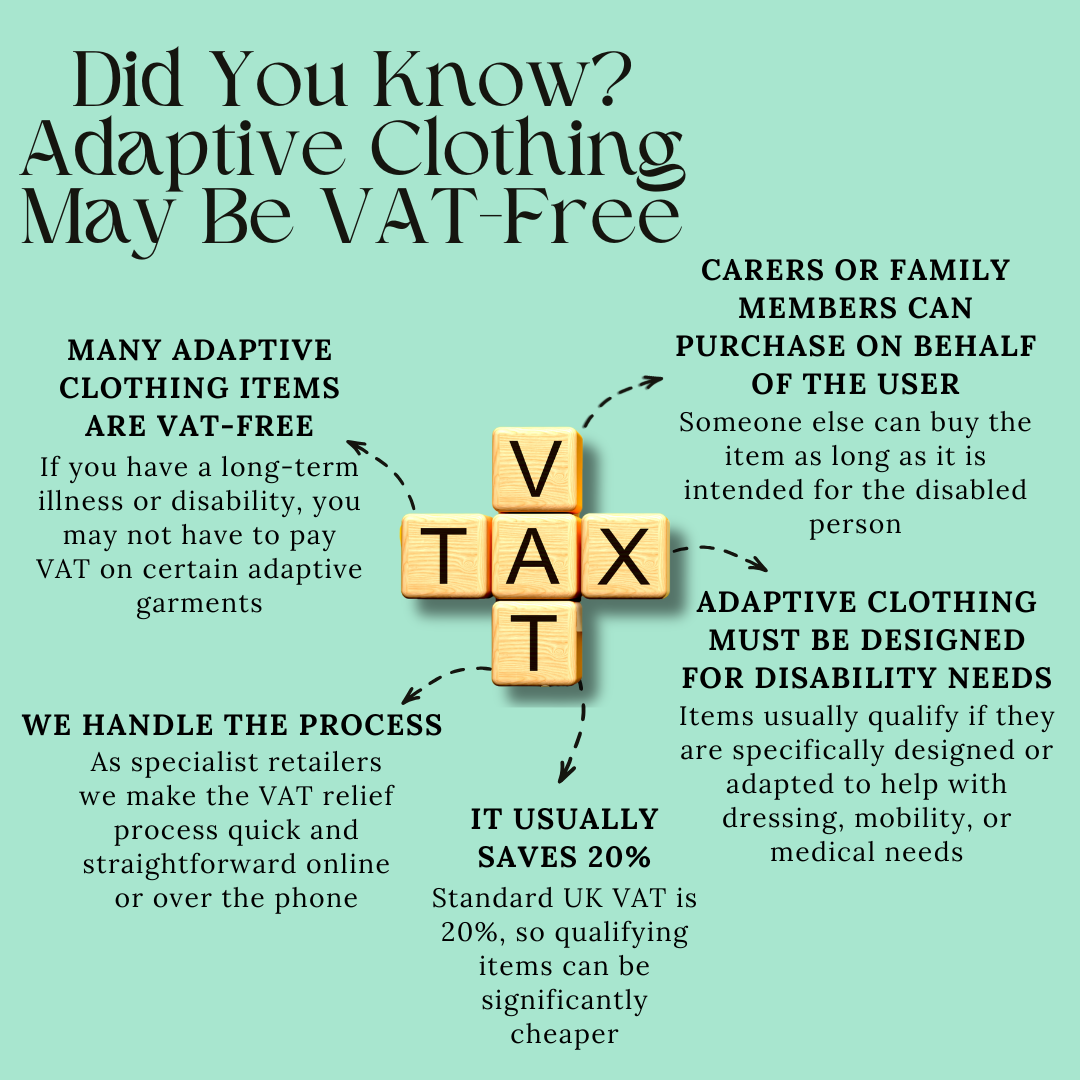
For many disabled people in the UK, everyday products can cost significantly more when specialist designs are needed. What many people don’t realise is that some products designed specifically for disabled people can be purchased without VAT.
This is known as VAT relief for disabled people, and it can make a real difference when buying items such as adaptive clothing, mobility aids, and assistive equipment.
In this guide, we’ll explain:
- What VAT relief is
- Who qualifies for VAT relief
- Which products are eligible (including adaptive clothing)
- How to claim VAT relief
- What retailers must do
- Useful resources and official guidance
What Is VAT Relief for Disabled People?
In the UK, Value Added Tax (VAT) is normally charged at 20% on most goods and services.
However, the government allows certain products designed specifically for disabled people to be zero-rated for VAT, meaning you do not have to pay VAT when purchasing them.
This relief applies when:
- The customer is disabled or chronically sick
- The product is eligible for VAT relief
- The product is for personal or domestic use
The rule comes from UK VAT legislation under the VAT Act 1994, which allows certain disability-related goods and services to be zero-rated.
Who Qualifies for VAT Relief?
VAT relief is available to individuals who HMRC considers “chronically sick or disabled.”
According to government guidance, this includes people with:
- A physical or mental impairment that has a long-term and substantial effect on daily activities
- A chronic illness recognised by the medical profession (for example diabetes or multiple sclerosis)
Importantly:
- You do not need to receive disability benefits
- You do not need to be registered disabled
- VAT relief is not means-tested
However, the relief does not apply to:
- Temporary injuries (such as a broken arm)
- Elderly people who are not disabled or chronically ill
What Products Qualify for VAT Relief?
VAT relief applies to products that are designed specifically for disabled people.
Examples include:
- Wheelchairs
- Mobility scooters
- Medical braces
- Assistive technology
- Certain alarms and communication devices
- Specialist clothing and footwear
Adaptive clothing can qualify where it has been designed specifically to meet the needs of disabled users, such as clothing with:
- Magnetic fastenings
- Easy-access designs
- Seated-fit garments
- Medical access openings
- Adaptive closures
The key rule is that the product must be designed solely for use by disabled people.
Simply buying a standard product that happens to help with a disability usually does not qualify.
For example:
| Eligible | Not Eligible |
| Adaptive clothing designed for wheelchair users | Standard clothing |
| Specialist footwear | Regular shoes |
| Wheelchairs | Recliner chairs designed for general use |
Why Adaptive Clothing Often Qualifies
Adaptive clothing is specifically created to address challenges such as:
- Limited mobility
- Dexterity issues
- Medical equipment access
- Dressing while seated
Because these garments are designed around disability-related needs, they may qualify for VAT relief when purchased by an eligible customer.
For adaptive clothing brands, it’s important that the design purpose is clearly documented, as HMRC guidance states the designer or manufacturer determines whether the product was created specifically for disabled people.
How to Claim VAT Relief
The process is usually very simple.
Instead of claiming VAT back later, VAT relief is applied at the point of purchase.
Most retailers will ask customers to complete a VAT exemption declaration form confirming:
- They are chronically sick or disabled
- The item is for personal use
The retailer keeps this form as part of their VAT records.
Customers do not send the form to HMRC.
Example of a VAT Relief Declaration
Typically, a declaration will include:
- Name and address
- Description of disability or long-term condition
- Confirmation that the item is for personal use
- Signature and date
Many online disability retailers provide a simple checkbox declaration during checkout.
Can You Claim VAT Back Later?
In most cases, no.
VAT relief must be applied when the item is purchased. If VAT was charged incorrectly, customers should contact the retailer for a refund rather than HMRC.
VAT Relief for Repairs, Installation and Accessories
VAT relief may also apply to:
- Repairs and maintenance of qualifying equipment
- Spare parts and accessories
- Installation costs where relevant
This means customers may benefit from VAT relief beyond the initial purchase.
Final Thoughts
VAT relief is an important but often overlooked support available to disabled people in the UK. For customers buying adaptive clothing and assistive products, this relief can make essential items significantly more affordable.
If you believe you qualify, it’s always worth asking the retailer whether VAT exemption applies to your purchase.
And if you’re buying adaptive clothing, make sure you purchase from retailers who understand disability VAT relief and provide the correct declaration process.
✅ Tip: Many specialist disability retailers make the process simple with a quick VAT exemption declaration during checkout.
Helpful Government Resources
For detailed guidance, you can consult the official HMRC resources:
- VAT relief on certain goods if you have a disability
- VAT Notice 701/7: Reliefs from VAT for disabled and older people
- Financial help for disabled people (VAT relief section)