

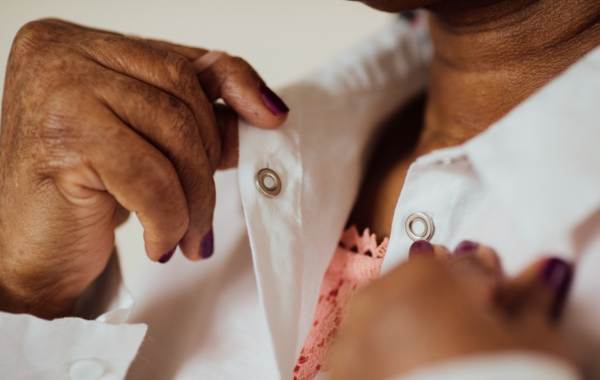
Dressing with arthritis, tremors and reduced grip strength
For many people, getting dressed is something that happens almost automatically.
But as the leading adaptive clothing company in the UK, we understand that for those living with arthritis, tremors, or reduced grip strength, everyday tasks like buttoning a shirt or fastening a zip can become unexpectedly difficult.
These changes are often gradual—but they can have a lasting impact on daily routines, independence, and comfort.
Why fine motor skills affect everyday dressing

Fine motor skills allow us to make small, controlled movements using our hands and fingers.When these are affected, even simple tasks like fastening clothing can become more challenging.
This may involve:
- Reduced grip strength in the hands
- Difficulty with coordination and precision
- Joint stiffness or pain
- Hand tremors or involuntary movement
Conditions such as Osteoarthritis and Rheumatoid Arthritis commonly affect hand function, making tasks like buttoning or gripping small items more difficult.
Tremors—sometimes linked to neurological conditions such as Parkinson’s disease—can also reduce control and accuracy in hand movements.
Why buttons and zips become difficult
Most clothing is designed with the assumption that hands are steady, strong, and precise.
But traditional fastenings rely on:
- Pinching small objects
- Aligning buttons with buttonholes
- Applying pressure and coordination at the same time
When grip strength is reduced or hand movements are less predictable, these actions can take significantly more effort.
This is why many people experience difficulty buttoning shirts with arthritis or struggle with zips and small fastenings.
The wider impact on daily life

The challenge isn’t just physical—it can affect how people feel day to day.
Dressing may:
- Take longer than expected
- Require more focus and energy
- Lead to frustration or fatigue
- Influence clothing choices
Over time, this can mean choosing outfits based on ease rather than preference—something many people don’t initially anticipate.
Practical tips to make dressing easier
There are small adjustments that can help reduce strain and make everyday dressing more manageable:
- Choose looser-fitting clothing that’s easier to put on
- Sit down while dressing for better stability
- Allow extra time to avoid rushing
- Use assistive tools like button hooks or zip pulls
Advice from the Royal College of Occupational Therapists often focuses on adapting daily routines to support independence and reduce effort.
Where to find support and advice
If you’re looking for more guidance on arthritis, tremors, or reduced grip strength, these organisations provide trusted, practical information:
- NHS
https://www.nhs.uk/conditions/arthritis/ - Arthritis Action
https://www.arthritisaction.org.uk/ - Parkinson’s UK
https://www.parkinsons.org.uk/information-and-support/tremor
These resources offer support, practical advice, and guidance tailored to different needs and conditions.
Understanding everyday challenges
The difficulties associated with dressing are often underestimated.
They’re not always visible—but they are part of daily life for many people.
Building better awareness around these challenges is an important step towards more thoughtful design, more inclusive clothing, and a better everyday experience.